
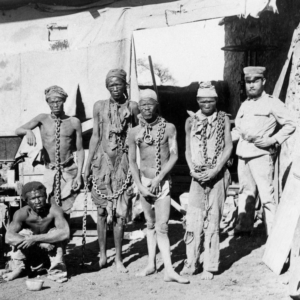
16-year-old Rinn explains how the Herero and Nama genocide unfolded and why its legacy endures
Between 1904 and 1908, German colonial forces killed an estimated 65,000 Herero and 10,000 Nama people in German South West Africa, now Namibia, in what historians widely regard as the first genocide of the twentieth century.
More than a century later, the atrocities continue to shape debates over colonialism, reparations and historical justice.
This explainer looks at how the genocide unfolded, why it is recognised as a genocide, and why its legacy remains contested today.
What happened in Namibia?
The genocide began after the Herero uprising against German colonial rule in January 1904. Years of land seizures, the confiscation of cattle, forced labour and racial discrimination had fuelled growing tensions between Indigenous communities and German settlers.
Germany responded by sending Lieutenant General Lothar von Trotha and 10,000 soldiers to suppress the revolt.
The violence escalated over the following months, eventually spreading to the Nama people as well. Thousands of Herero and Nama were killed, while many others were imprisoned in concentration camps. Military resistance continued until 1908, when German forces finally suppressed the Nama uprising.
View this post on Instagram
Who are the Herero and Nama?
The Herero are a Bantu-speaking people who have traditionally lived across central Namibia and neighbouring parts of Botswana and Angola.
At the turn of the 20th century, their society was built around cattle herding, which was central to their economy, culture and identity. While many Herero later adopted Christianity, traditional beliefs remained important within their communities.
The Nama are the largest Khoekhoe-speaking group in Namibia. Like the Herero, many Nama communities relied on pastoralism, raising sheep and cattle across southern Namibia. Both peoples had established political structures and trading networks long before German colonisation.
What led up to the genocide?
Germany declared present-day Namibia a colony in 1884, naming it German South West Africa. Its claim was formalised during the Berlin Conference of 1884–85, where European powers divided much of Africa among themselves without consulting the continent’s inhabitants.
As German settlement expanded, Indigenous communities increasingly lost their land, cattle and political autonomy. Colonial authorities imposed forced labour systems and introduced racial laws that favoured German settlers.
These pressures intensified during the late 19th century, particularly after disease devastated Herero cattle herds, making many families vulnerable to debt and land loss.
On 12 January 1904, Herero fighters led by Samuel Maharero launched an uprising against German rule, attacking farms and settlements around Okahandja. Around 120 German settlers were killed, although Maharero instructed his fighters not to target missionaries, women, children, British settlers, Boers or other African communities.
Germany responded with overwhelming military force, transforming a colonial conflict into a campaign of extermination.
Harbingers’ Weekly Brief
Subscribe to the Harbingers’ Weekly Brief, a newsletter written by the editorial board of Harbingers’ Magazine, the world’s youngest newsroom, delivered to your inbox every Monday morning.
![author_bio]()


How did the genocide unfold?
The Battle of Waterberg on 11 August 1904 marked the beginning of the genocide’s deadliest phase. German forces surrounded the Herero, but many escaped eastwards into the Omaheke Desert.
Rather than allowing them to return, German troops guarded key water sources and sealed escape routes. Thousands died from thirst, starvation and exhaustion.
On 2 October 1904, von Trotha issued his extermination order, declaring: “The Herero are no longer German subjects… Any Herero found within the German borders, with or without a weapon or cattle, will be shot. I shall no longer accept women or children. I shall drive them back to their people or have them fired upon.”
Historians regard the proclamation as one of the clearest pieces of evidence demonstrating genocidal intent.
As the conflict expanded, the Nama also rose against German rule. Captured Herero and Nama prisoners were imprisoned in concentration camps, where forced labour, disease, malnutrition and abuse claimed thousands more lives.
Why is it called a genocide?
Historians describe the campaign as genocide because German colonial authorities deliberately sought to destroy the Herero and later the Nama as distinct peoples.
The extermination order, the forced displacement of civilians into the desert, the deliberate denial of access to water, and the use of concentration camps all demonstrate an intention to destroy substantial parts of both communities.
Many historians also point to the racist ideology underpinning German colonial rule. During and after the conflict, the remains of some victims were sent to Germany for racial science experiments, reflecting beliefs in European racial superiority.
Although the United Nations Genocide Convention would not be adopted until 1948, scholars widely agree that the events in German South West Africa meet the modern definition of genocide.
Who resisted German rule?
Samuel Maharero led the Herero uprising in 1904 and became one of Namibia’s most important anti-colonial figures.
Among the Nama, Hendrik Witbooi organised resistance against German occupation and united several Nama groups in opposition to colonial rule. He was killed in battle in October 1905, but fighting continued under other leaders, including Jakob Morenga and Fransman Nama, until 1908.
Today, both Maharero and Witbooi are recognised as national heroes in Namibia.
What happened after the killings?
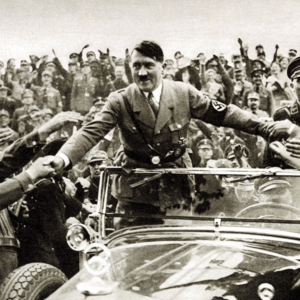
The end of the fighting did not end the suffering. Survivors lost most of their land and cattle and were forced into labour for German settlers under harsh colonial regulations. The social and economic foundations of the Herero and Nama communities were devastated.
When South Africa took control of the territory after the First World War, many colonial inequalities remained. Large areas of fertile land stayed in white ownership, while Indigenous communities continued to face discrimination and dispossession.
The effects of the genocide continueto shape patterns of wealth, land ownership and inequality in Namibia today.
What is Germany doing today?
In 2021, Germany officially recognised the killings as a genocide and announced a €1.1bn ($1.34bn) funding package for development projects in Namibia over 30 years. However, Germany has described the funding as a gesture of reconciliation rather than legal reparations.
The agreement has been criticised by many Herero and Nama organisations, which argue that descendants of victims were not adequately represented during negotiations and that the package falls short of meaningful reparations.
Germany has also returned some human remains and cultural artefacts taken during the colonial period. In 2024, Germany and Namibia agreed to continue discussions over additional financial support and reconciliation measures.
Why does it still matter?
The genocide in German South West Africa remains one of the clearest examples of the violence of European colonialism.
It continues to influence debates over reparations, land reform, historical responsibility and the legacy of the empire.
For many Namibians, particularly descendants of the Herero and Nama, the consequences of the genocide remain visible more than a century later.

© 2026 The Oxford School for the Future