



16-year-old Irma examines the conflict’s impact across the Middle East and the global risks
Conflict in the Middle East has entered its fifth week after the US and Israel launched large-scale attacks on Iran at the end of February. Since then, the situation has escalated significantly, with direct military confrontation between key powers increasing the risk of a wider regional war and a potential global economic crisis.
This explainer outlines the origins of the war, the main actors involved, and the risks of it expanding further.
Harbingers’ Weekly Brief
Subscribe to the Harbingers’ Weekly Brief, a newsletter written by the editorial board of Harbingers’ Magazine, the world’s youngest newsroom, delivered to your inbox every Monday morning.
![slide image]()
![author_bio]()


What is happening in the Middle East?
The war began on 28 February, when the United States and Israel launched coordinated large-scale strikes on Iran. According to multiple outlets, including AP and statements from the White House, the operation aimed to degrade Iran’s missile capabilities, weaken its regional network of proxies (non-state groups supported by a country to act on its behalf) and prevent it from developing a nuclear weapon.
The opening strikes killed Iran’s supreme leader, Ayatollah Ali Khamenei. He was later succeeded by his son, Mojtaba Khamenei. The 56-year-old has remained out of the public eye since assuming the position, amid reports that he was wounded in the initial strikes, though the extent of his injuries remains unclear.
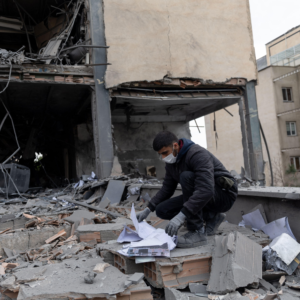
US and Israeli strikes have since hit a wide range of targets across Iran, including missile infrastructure and sites linked to Iran’s nuclear programme.
One of the deadliest incidents during the initial wave of attacks was the strike on a primary school in Minab, southern Iran, at around midday on the first day, 28 February, in which at least 110 children were killed.
According to Human Rights Watch,the “unlawful attack killed scores of civilians, including schoolchildren”, and should be investigated as a possible war crime. A preliminary US military investigation has foundthat the US was responsible, but this has not been formally confirmed.
How has Iran retaliated?
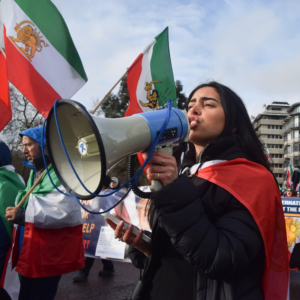
Iran has condemned the strikes as illegal and retaliated with missile and drone attacks on the US’s military bases and regional allies. Targets have included Israel, US installations across the Middle East, and energy infrastructure in Gulf states.
Following the deaths of senior Iranian figures including Ali Larijani and Gholamreza Soleimani, Iran launched further strikes on central Israel. Two people were reportedly killed in Ramat Gan, near Tel Aviv.
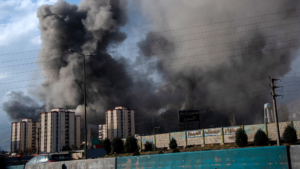
Iran has also targeted Saudi Arabia, Kuwait, Iraq and the United Arab Emirates (UAE). Reports indicate repeated attempted strikes on the UAE, which led to temporary closure of airspace, explosions over Dubai, a fire in Fujairah and a fatal strike in Abu Dhabi.
At least 12 people were killed in Israel during the initial phase of the conflict, based on Israeli emergency service data. The numbers continue to change, illustrating the variability across sources and the challenges of real-time casualty reporting.
To date, the death tollis in the thousands, including more than 1,400 civilians in Iran, as well as casualties among US personneland in Gulf states.
Why have the US and Israel attacked Iran?
The US and Israel described their actions as “pre-emptive” strikes, intended to prevent a larger future attack. They argue that Iran had resumed or accelerated elements of its nuclear and missile programmes following earlier tensions in June 2025.
US intelligence assessments suggested that Iran or allied groups could attack Israel or US forces in the region. Iran’s support for armed groups such as Houthis and Hamas has long been cited by both Washington and Israel as a key security concern.
From Israel’s perspective, Iran represents a long-term existential threat. Israeli officials have argued that a nuclear-armed Iran would fundamentally alter the regional balance of power.
However, critics question whether the evidence justified such a large-scale strike and warn that the action risks further destabilising the region.
What is NATO’s position?
“The war in Iran is not a NATO matter,” said Finland’s president Alexander Stubb following criticism of the alliance from President Trump. NATO’s public position has emphasised that NATO is a defensive alliance and it is not participating in offensive operations against Iran.
Instead, NATO has focused on monitoring the situation and protecting member states from potential spillover.
Why did the US withdraw from the Iran nuclear deal?
The US withdrew from the Iran nuclear deal (formally known as the Joint Comprehensive Plan of Action) on 8 May 2018, during Trump’s first term as president.
The administration argued that the agreement did not go far enough in preventing Iran from developing nuclear weapons, did not adequately address its missile programme and included time-limited restrictions.
Critics of the withdrawal argue that it weakened diplomatic mechanisms for monitoring Iran’s nuclear activities and contributed to the current escalation.
View this post on Instagram
How has the war impacted the global economy?
The war has had a major economic impact because Iran controls the Strait of Hormuz and is currently refusing to let most vessels use what is one of the world’s most important oil shipping routes. Around 20% of global oil supply passes through this narrow corridor, meaning any disruption can quickly affect energy markets.
Oil prices have risen sharply and stock markets have dropped since the start of the war. As a result, fuel and transport costs have increased globally. The International Monetary Fund (IMF) has warned that higher energy prices will lead to inflation and slower economic growth, especially in countries that rely heavily on imported oil.
In addition, disruptions to shipping and infrastructure in the Gulf have added pressure on global supply chains and increased financial uncertainty.

© 2026 The Oxford School for the Future